How Apple is helping Indian developers achieve perfection; put India on world map
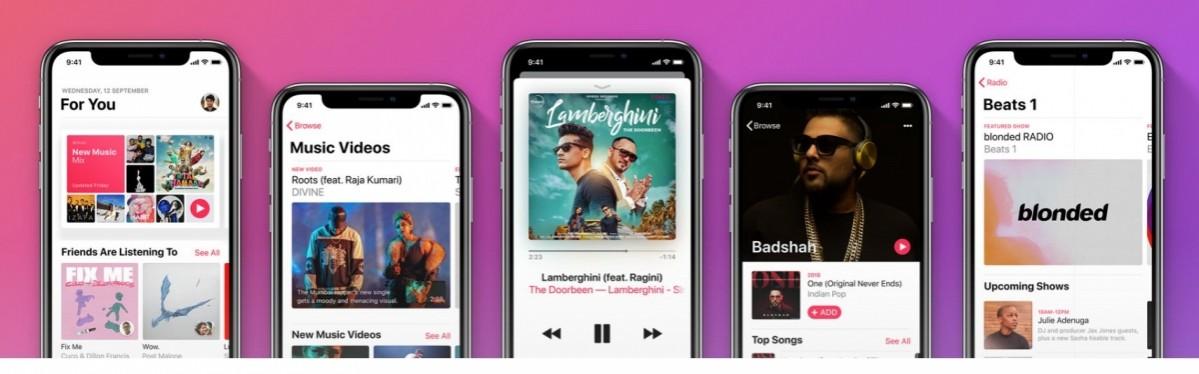
Apple Music has reached the record mark of 100 million songs in its catalog, a number that will continue to grow and exponentially multiply.
The company said that 21 years on from the invention of iTunes and the debut of the original iPod, "we've gone from 1,000 songs in your pocket to 100,000x that on Apple Music".
"It's phenomenal growth by any metric. The entire history, present, and future of music is at your fingertips or voice command," said Rachel Newman, Apple Music's global head of editorial.
Apple MusicApple
Back in the 1960s, only 5,000 new albums were released each year.
Today, anywhere in the world, in 167 countries on Apple Music, any artist of any description can write and record a song and release it globally.
"Every day, over 20,000 singers and songwriters are delivering new songs to Apple Music - songs that make our catalog even better than it was the day before," said Newman.
Apple MusicApple.com (screen-grab)
With 100 million songs, human curation is more important than ever for connecting artists and fans.
"At Apple Music, human curation has always been the core to everything we do, both in ways you can see, like our editorial playlists; and ways you can't, like the human touch that drives our recommendation algorithms," she added.
Apple Music gained popularity rapidly after its launch, passing the milestone of 10 million subscribers in only six months.
The music service has more than 100 million subscribers around the world.
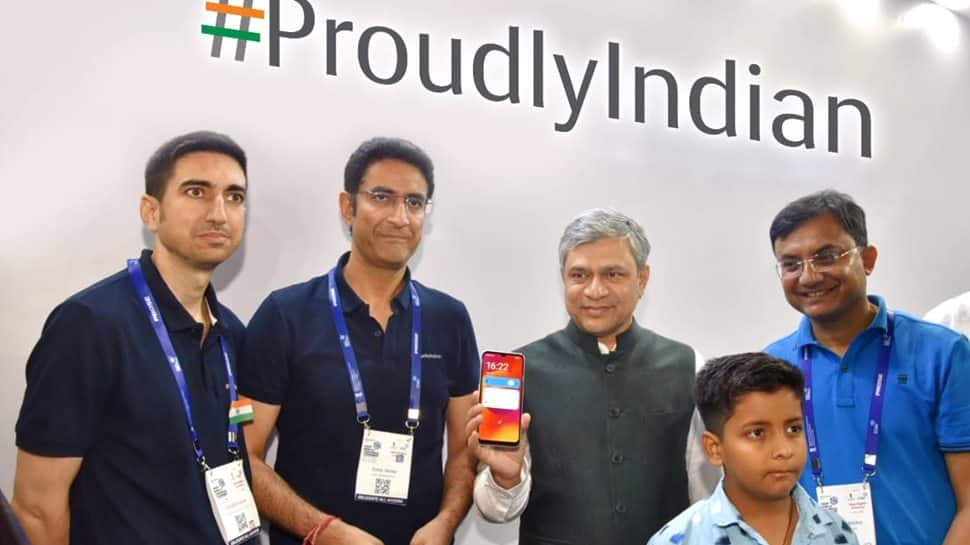
With the 5G launch, smartphone makers' biggest focus will be on the low and mid-budget segment phones. While there are multiple 5G smartphones already in the market, Indian smartphone maker Lava International has announced to debut in the segment by Diwali with its LavaBlaze 5G affordable smartphone. The phone will be priced at around Rs 10,000.
Pre-bookings for the Lava Blaze 5G will commence around Diwali this year. Experts claimed that it would be the cheapest 5G smartphone in India. A random search on the various smartphone tracking portal showed that the cheapest 5G device at present is priced around Rs 12,000.
Lava said that it aims to provide the next-generation 5G technology to Indians at an affordable price point.
As far as Lava Blaze 5G smartphone's features are concerned, the device will have MediaTekDimensity 700 chipset, 50 megapixels (MP) AI triple rear camera and 8 MP front camera and come with an anonymous call recording feature.
The Lava Blaze 5G will have a 6.5-inch LCD display with 720p resolution and 90Hz refresh rate, a side fingerprint scanner, 4GB RAM and 128GB storage. There is a slot for a microSD card, thus supporting an extension of memory.
It is powered by a 5,000 mAh battery and runs Android 12 out of the box. The Blaze 5G will feature a USB-C port, Bluetooth 5.1, room for two SIM cards, and Dual VoLTE.
The smartphone was unveiled by telecom minister Ashwini Vaishnaw at the India Mobile Congress in the national capital.
You should junk your old iPhone immediately. Experts tell you why.
Apple iPhones come with long years of security and OS updates and you can probably use them for year and years. Sadly, however, even your mighty iPhone has an end-of-life date! Reason is that after a few years, Apple avoids providing the essential updates to the older iPhones. And that means old iPhones are prone to attract hackerswho can easily get into your device.
Security experts Kaspersky explained that the closed Apple ecosystem only permits apps that don't access the phone's root coding but also reduces both the need for iOS antivirus and makes an iOS antivirus impossible to create for App Store approval. However, security experts have also warned that iOS is not invulnerable to malware attacks. That means, “if Apple misses any vulnerabilities or chooses certain undesirable approaches to security, you will have little to no control over this.”
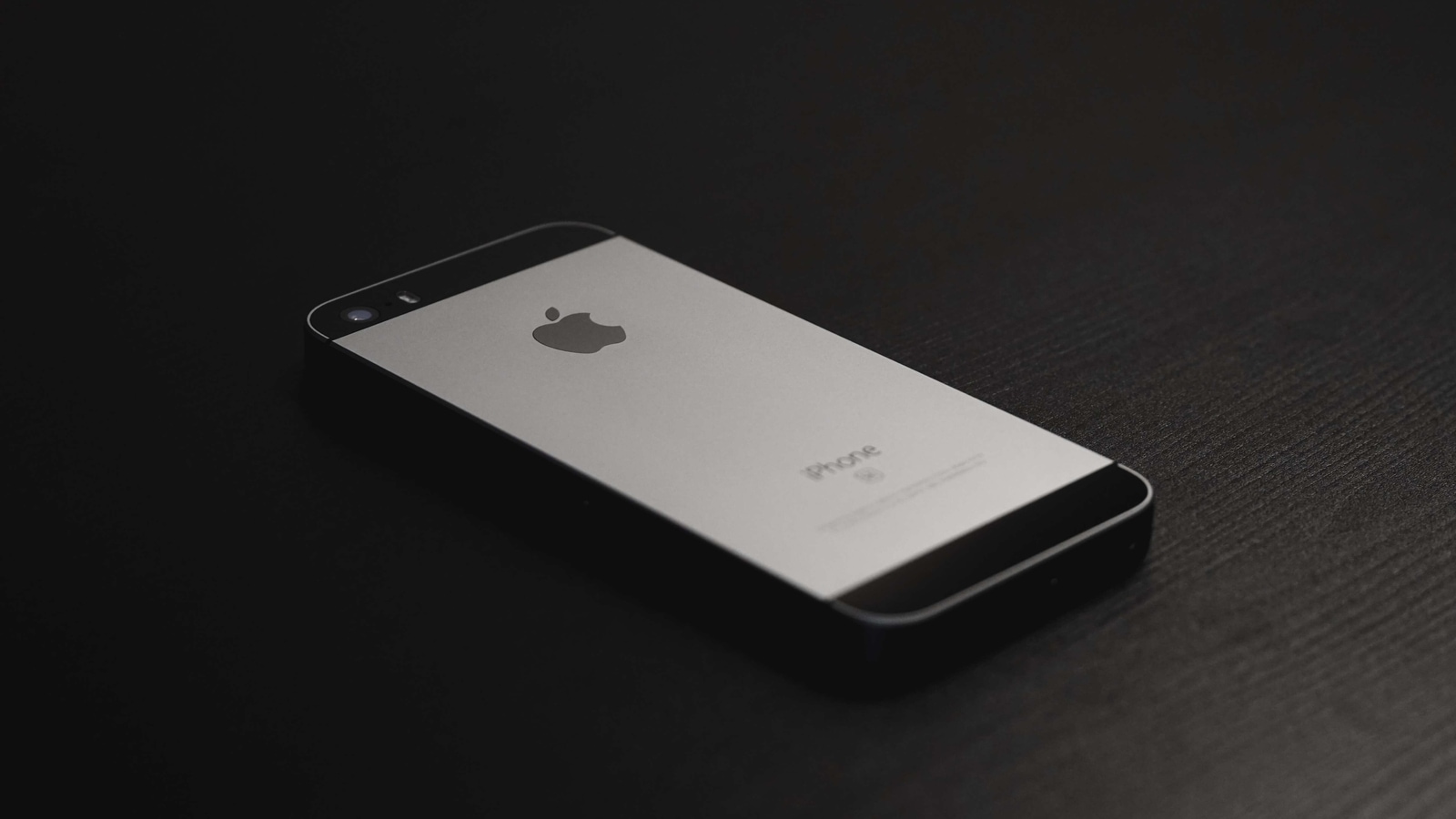
Hence, Kaspersky experts urge users to consider replacing older iPhones if they are no longer actively getting operating system updates. Recently, Apple has released the latest iOS 16 update, and there are a bunch of models that are left unsupported. The list includes - iPhone, iPhone 3G, iPhone 3GS, iPhone 4, iPhone 4S, iPhone 5, iPhone 5C, iPhone 5S, iPhone 6, iPhone 6 Plus, iPhone 6S, iPhone 6S Plus, iPhone SE, iPhone 7, and iPhone 7 Plus.
If your iPhone is on the list, it is probably time to move on and get a new iPhone for yourself! Meanwhile, security experts have shared some tips to keep your mobile phone safe and secure. Have a look here.
How to keep your iPhone safe and secure
Stick to the Apple store to download official apps.
Never download apps without verifying their safety first.
Always update to the latest OS version as soon as possible.
Consider replacing your phone once it is unsupported by the OS.
Enable password protection on your OS, apps, and services when possible.
Always turn on multi factor authentication. Use the password plus biometrics — such as fingerprint scanning or facial ID.
Tech giant Google's upcoming Pixel Watch was reportedly briefly up for pre-order on Amazon, revealing bands and Fitbit Premium perk.
According to 9To5Google, the next Google smartwatch features a variety of bands, watch faces, and Fitbit integration in what is arguably the biggest Pixel Watch leak to date, as shown in a series of official-looking photographs.
There appear to be two different leather band styles from there, including one style in black and green, and another in black, grey, and orange.
Finally, there appears to be a woven fabric style band for the Pixel Watch, which is in vibrant orange and green colours, as well as a more subdued black, the report said.
A recent report said that the upcoming smartwatch will be powered by a 300mah battery and may also offer cellular connectivity.
The report also mentioned that the smartwatch is likely to come with cellular connectivity, however, it is not clear which of the model will support the feature.
Three models of the upcoming smartwatch have received approval from the Bluetooth 'Special Interest Group' (SIG).
--IANS
vc/kvd
(Only the headline and picture of this report may have been reworked by the Business Standard staff; the rest of the content is auto-generated from a syndicated feed.)
With hybridworking on the rise and data mismanagement continuing to make headlines, you’d be forgiven for thinking that even the most unsuspecting users would be interested in securing their online privacy.
However, new data provided to TechRadar Pro by digital intelligence platform SimilarWeb indicates that the growth of veteran privacy-focused browsersMozilla Firefox and Opera is stalling.
A rough estimate of Opera’s user acquisition rate (based on traffic to the browser installation page) suggests June was an especially low point, marking a 23.1% decrease in pace of growth since the start of the year. There have been minor gains since then, but Opera appears to be becoming less and less attractive to new users.
Meanwhile, Firefox has fared even worse, perhaps as a consequence of the decision to focus on Mozilla VPN and other privacy products. In August, visits to the browser’s install page were down 7% on January, and its market share(opens in new tab) (which once sat at 30%) has fallen to just 3.35%.
The raw data shows that Firefox currently attracts only a few hundred thousand new users each month, while Opera is drawing in circa two million. Market leader Google Chrome, however, is thought to be used by more than 3.1 billion(opens in new tab) people.
The rise of the “big default browser”
The release of the figures by SimilarWeb coincided with a report(opens in new tab) published by Mozilla in late September 2022 that accused Google, Microsoft and Apple of “abusing their privileged position” to make it “difficult or impossible” for users to change the browsers set as default by the operating system.
Battle lines have already been drawn this year with the European Union’s antitrust legislation targeting Google, Apple and Meta’s stranglehold in browsers, search engines and other markets. Google also recently failed to overturn a €4.34 billion antitrust fine relating to restrictions on manufacturers of Android devices designed to “consolidate the dominant position of its search engine”, according to a spokesperson for the EU’s General Court.
Google Chrome and Microsoft Edge are both overwhelmingly popular defaults that trade almost entirely on brand recognition and their status as default options across multiple operating systems (Chrome on Chrome OS and Android, and Edge on Windows 11). Other “big defaults” include the macOS and iOS versions of Safari.
“Default settings can create burdens for consumers who prefer to use a browser other than the default, but who are unable to or unaware how to change their default. We know from our research that some consumers adopt unnecessarily cumbersome workarounds to stick with their preference,” the Mozilla report claims.
Mozilla’s report offers some explanation as to why operating system providers pursue these kinds of strategies, stating that the developers of “big default” browsers stand to profit from user data.
“Although consumers don’t pay to use browsers, their browsing history is valuable data for platforms with advertising businesses like Meta, Amazon, Google and Microsoft. It is not coincidental that many of these companies have yet to implement robust anti-tracking technologies in their browsers or deprecate third-party cookies,” said Mozilla.
However, the firm also acknowledged that Big Tech’s motives extend beyond data collection: the operators of the “big default” browsers make significant sums through advertisements served to users locked into their proprietary search engines.
“Google Chrome is captive to Google Search (powered by Google advertising) and Microsoft Edge is captive to Bing search (powered by Microsoft advertising). Independent browsers are the only companies able to freely consider search defaults on behalf of their consumers. They are also among the few companies to encourage discovery, evaluation, adoption and innovation of alternative search and advertising experiences.”
(Image credit: Shutterstock)
Browser choice
Although the likes of Mozilla and Opera have struggled of late, an enduring demand for “alternative” web browsers is supported by separate data from SimilarWeb.
From January through August, privacy-focused Brave Browser saw its estimated monthly downloads surge 272%. Admittedly, Brave saw just 17,827 and 66,340 hits to its installation page during these months, respectively, but that’s a significant rate of growth nonetheless.
These numbers suggest the continued success of “big default” browsers likely isn’t just the result of the suppression of alternatives, but also a function of user apathy and brand recognition.
While Big Tech seeks pure profit, privacy-focused browsers may simply be fighting amongst themselves. The growth in installs Brave has seen this year suggests Mozilla Firefox and Opera are losing market share to newer options, such as Brave and DuckDuckGo’s new Privacy Browser (for which we don’t currently have any data).
Crucially, the statistics also suggest that the push for web browser privacy may be a small movement, but one that’s still capable of gaining traction.
Apple’s decision to let users change their default browser in iOS 14 is a welcome one in the fight to get consumers to care about their online privacy, but the first step towards total browser independence is to abolish the idea of defaults completely – something that may never happen with Apple maintaining its own “big default” on the most popular mobile operating system in the US.
As things stand, Mozilla may have made the mistake of assuming that every ”big default” browser user is a potential convert. User apathy will always play into the hands of large and powerful companies; even minus suppression tactics, “big default” browsers would still trounce independent alternatives in monthly growth.
With a solution like inviting users to choose their own default browser from a list of privacy-focused alternatives, alongside simple, reasoned arguments for doing so, that apathy could wane. It’s just that legislating for something like this seems unthinkable to most lawmakers outside the European Union.
Mozilla, DuckDuckGo, and eleven other companies did recently lobby the US Congress to table a data privacy bill that would address Big Tech monopolies, default browsers, and unfettered data collection, but the chances of the move leading anywhere are slim, thanks to Big Tech’s lobbying resources.
In addition, the lack of regulations surrounding “revolving doors” (whereby politicians leave office, often for corporate positions, and use their connections to curry favor with lawmakers) in territories such as the UK and Australia mean that legislating for web privacy and freedom of choice for anonymous browsers there may turn out to be an extremely slow process, if not a completely insurmountable problem.
Would privacy-focused browsers see more even growth if users were given the option to make an informed choice between them? The problem, right now, is that we might never get to find out.
Apple’s latest Adaptive Transparency feature, which was announced at company’s Far Out event and so far was exclusive to the new AirPods Pro 2, is now coming to the original AirPods Pro. The latest beta update of iOS16 is reportedly brings the feature to the first-gen AirPods Pro.
The setting to turn the feature on can be spotted on the third beta of iOS 16.1 update. According to report from Macrumors, a 5A304A beta firmware is required to see this update.
Apple first introduced Adaptive Transparency feature with its 2nd gen AirPods Pro. The feature was introduced to let AirPods block out loud environmental noises – such as construction works, chaos, loud music at a concert, etc without affecting the ambient sound.
“Transparency mode makes it possible for listeners to stay connected to and aware of the world around them. Now, Adaptive Transparency takes this customer-loved feature even further. The powerful H2 chip enables on-device processing, which reduces loud environmental noise — like a passing vehicle siren, construction tools, or even loud speakers at a concert — for more comfortable everyday listening,” Apple said while launching the new AirPods Pro.
Apple’s AirPods Pro 2 come with an upgraded H2 chip which improves the Adaptive Transparency functionality and AirPods Pro come with H1 chip, therefore – it is unclear how much is the one different from the other.
iOS 16 is available on iPhone 8, iPhone 8 Plus, iPhone X, iPhone XS, iPhone XS Max, iPhone XR, iPhone 11, iPhone 11 Pro, iPhone 11 Pro Max, iPhone 12, iPhone 12 Mini, iPhone 12 Pro, iPhone 12 Pro Max, iPhone 13, iPhone 13 Mini, iPhone 13 Pro, iPhone 13 Pro Max, iPhone SE (second generation and later), iPhone 14, iPhone 14 Plus, iPhone 14 Pro, and iPhone 14 Pro Max.