WhatsApp, a Meta-owned instant messaging app, has always been introducing and upgrading its features. This time, as per a report, the instant messaging platform is planning to work on a feature which would allow users to report status updates on the desktop beta version.
According to a report by WABetaInfo, the alleged feature would let users report a status update within a new menu in the status section. Reportedly, if any user finds a suspicious status update which violates the Terms of Service, users will have the option to report it to the team.
The report also suggests that the feature is currently under development and would soon be rolled out on WhatsApp Desktop beta.
Meanwhile, The festival of Christmas and holiday season is around the corner. With the advent of technology, now it is easier to wish your family, friends and dear ones with quirky Instagram and WhatsApp stickers rather than sending them greeting cards and telephonic wishes. If you are wondering how to send lively Christmas stickers on Instagram and WhatsApp, here is the guide for you:
Guide to send Christmas stickers on WhatsApp
In order to send the Christmas stickers, a user must download them from the Play Store. Proceed to the Play Store and download any sticker pack of choice from there. After downloading these sticker packs, users can find multiple sticker packs inside the app, all with an Add button next to them in a shape like a plus (+). Users can tap on these buttons to add these stickers on their WhatsApp app.
After adding these stickers to the app, users can send any sticker by simply going to WhatsApp, opening the chat window with any contact and selecting stickers of their choice. Users can open the emoji section and head to the right-most tab for stickers which is where all the new Christmas stickers will be present.
Guide to send Christmas stickers on Instagram
To send the Christmas stickers on Instagram, just open the Direct Messages on the app and then open the chat window of the receiver. A sticker icon will appear next to the text-typing bar at the bottom. Tap on the button to open the sticker-search bar. Type Christmas to find the festival themed stickers. Tap on any of these stickers and they will be sent.
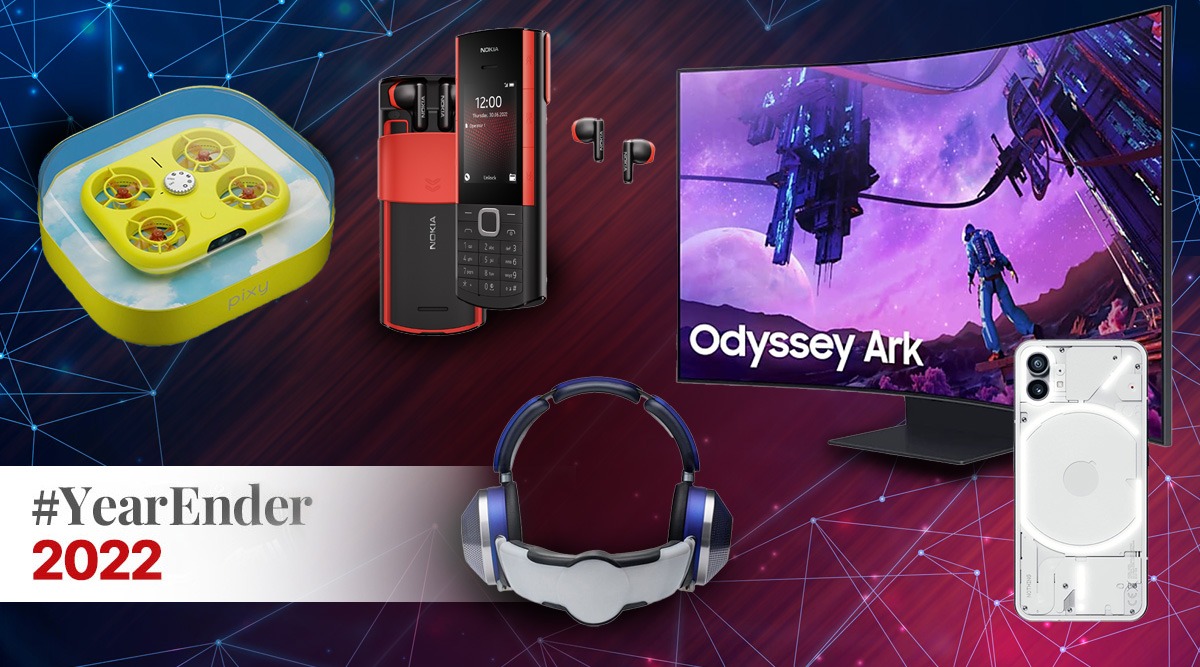
Among other things, the year 2022 will also be remembered for weird gadgets and strange ideas in tech. They were bold, risky, and well, truly original. Not just smaller brands, but legacy tech brands also jumped to the idea that edgy and bizarre are the new cool. Strange tech was the craze for 2022. Here are some of the oddest gadgets we saw this year from the Snap Pixy drone to Samsung’s Odyssey Ark curved monitor to the Nokia 5710 XpressAudio.
Snap Pixy
It was conceptualised as a drone-powered camera that could fly around and record videos and photos for sharing on the Snapchat app. The idea was to have a lightweight, toy-like, selfie drone creating great-looking images and video. It was indeed a weird-looking product with several good ideas backed into it. However, it was far from perfect.
The drone could only fly for five minutes on a single charge and its image and video quality were a hit-and-miss depending on the lighting conditions. Being the first-generation product, the Pixy was a polished device but had several shortcomings. Less than four months after its launch, Snapchat killed its drone-powered camera and shut down the development as part of a re-prioritisation of company resources.
Nothing Phone (1)
It might not come close to the iPhone 14 but Nothing’s debut phone was anything but funky, fun, and a little flawed. From the front, Nothing Phone (1) looked like a traditional flagship Android device. However, flip the phone over and you will find a series of white LED strips across a transparent glass back to create patterns of light that Nothing calls “glyphs”.
Subscriber Only Stories
It was a well-executed attempt at making a distinctive-looking smartphone that doesn’t cost much. In a way, Nothing represented something lighthearted and even silly when smartphone designs have become flat. So yeah, love it or hate it, there’s no doubt that Nothing Phone (1) has proven to be majorly popular and has been generating buzz ever since its first unveiling.
Dyson Zone
More than its staggering $950 price, Dyson’s Zone headphones will make you sit and take notice. The combination of headphones and air purifiers is not only unique but also tests the imagination of human beings in achieving things that often look impossible to accomplish. The weird gadget doubles up as a personal air purifier for your nose and mouth, securing you inside an attachable mouthpiece, free from air pollution, while also delivering clean audio with active noise cancellation.
The Zone has been the result of six years of development, as the company wanted to develop a portable iteration of its existing air purification technology. The Zone may look outlandish, but that’s the beauty of a product.
Advertisement
Samsung Odyssey Ark
The Odyssey Ark wasn’t just another monitor. The 55-inch Odyssey Ark, which retailed for $3500, brought a curved screen gaming monitor into the world that felt as if you were inside a virtual game. While most monitors were meant to be used horizontally, the Odyssey Ark came with a Cockpit mode that would let you rotate it by 90 degrees. Everything about the Ark was bizarre. Its Multi View feature was designed to show you four screens at once on Ark. From its specs to design, Ark was designed to satisfy nerds.
Nokia 5710 XpressAudio
The Nokia 5710 XpressAudio wasn’t anything but a route to “escapism” in a smartphone-obsessed world. The message from HMD Global, the Finnish company that licensed the rights to produce Nokia phones, was actually fairly profound: to have fun with a device. The Nokia 5710 XpressAudio was unquestionably different, a feature phone with true wireless earbuds built right in. The device was created from an untraditional board, and the reason why it promised a twist to “boring” phone designs is that we are so accustomed to them.
HidrateSpark Pro Steel
Finally, the coolest and strangest thing we saw this year was HidrateSpark’s $80 smart water bottle. The smart water bottle came with both chug and straw lids and an LED puck at the base that lights up in customisable colours, reminding you to drink water throughout the day. The 32-ounce HidrateSpark Pro supported Bluetooth technology and connects to the HidrateSpark App and also provides real-time data to the Apple Health App and Apple Watch. We didn’t know we needed a smart bottle in our lives.
The Redmi K60 series will succeed the popular Redmi K50
Highlights
Redmi K60 series is expected to go on sale on December 31
All three handsets are tipped to pack 5,500mAh battery
The Redmi K60 Pro is expected to run on Snapdragon 8 Gen 2
Redmi K60 series, which is said to include the Redmi K60, the Redmi K60 Pro, and Redmi K60E, has been confirmed to launch in China in December. The launch date was recently leaked by a tipster, but has now been officially confirmed by the Chinese company. Redmi has confirmed that the Redmi K60 series will debut in China on December 27. Leaks about the series' expected specifications have also surfaced ahead of launch, providing an insight into what to expect. A set of leaks on Weibo have also detailed the expected specifications for the lineup, hinting that the Redmi K60 Pro could be powered by a Snapdragon 8 Gen 2.
According to the Redmi website in China, the Redmi K60 series will launch in China at a New Year's conference on December 27. The website mentions that the reveal is scheduled for 7 PM local time (4:30 PM IST) and gives an option to interested customers to book the handset in advance. Redmi General Manager Lu Weibing had also teased the same launch date for the K60 series on Thursday. The handsets are also tipped to go on sale starting December 31.
Meanwhile, specifications for the upcoming Redmi K60 series seemed to have leaked on Chinese social networking website Weibo. Tipster Mukesh Sharma (@stufflistings) spotted the leaks and tweeted out a detailed list of specifications. According to the leak, the Redmi K60, the Redmi K60 Pro, and Redmi K60E could be powered by the Snapdragon 8+ Gen 1, Snapdragon 8 Gen 2, and MediaTek Dimensity 8200 chipsets, respectively.
The leak also mentions that all three phones will pack a 5,500mAh battery, with the Redmi K60 and Redmi K60E said to support 67W fast charging, while the Redmi K60 Pro is expected to support 120W fast charging.
Both the Redmi K60 and the Redmi K60 Pro are also expected to sport a triple rear camera setup, led by a 64-megapixel primary sensor with OIS support.
According to earlier reports, the vanilla Redmi K60 is expected to feature a 6.67-inch quad-HD+ display, with 120Hz refresh rate. In addition to the 64-megapixel main sensor, the handset is said to include an 8-megapixel ultrawide sensor, and a 2-megapixel macro lens.
Featured Video Of The Day
Thieves Dig 10-Foot-Long Tunnel To SBI In Kanpur, Take 1.8 Kg Of Gold
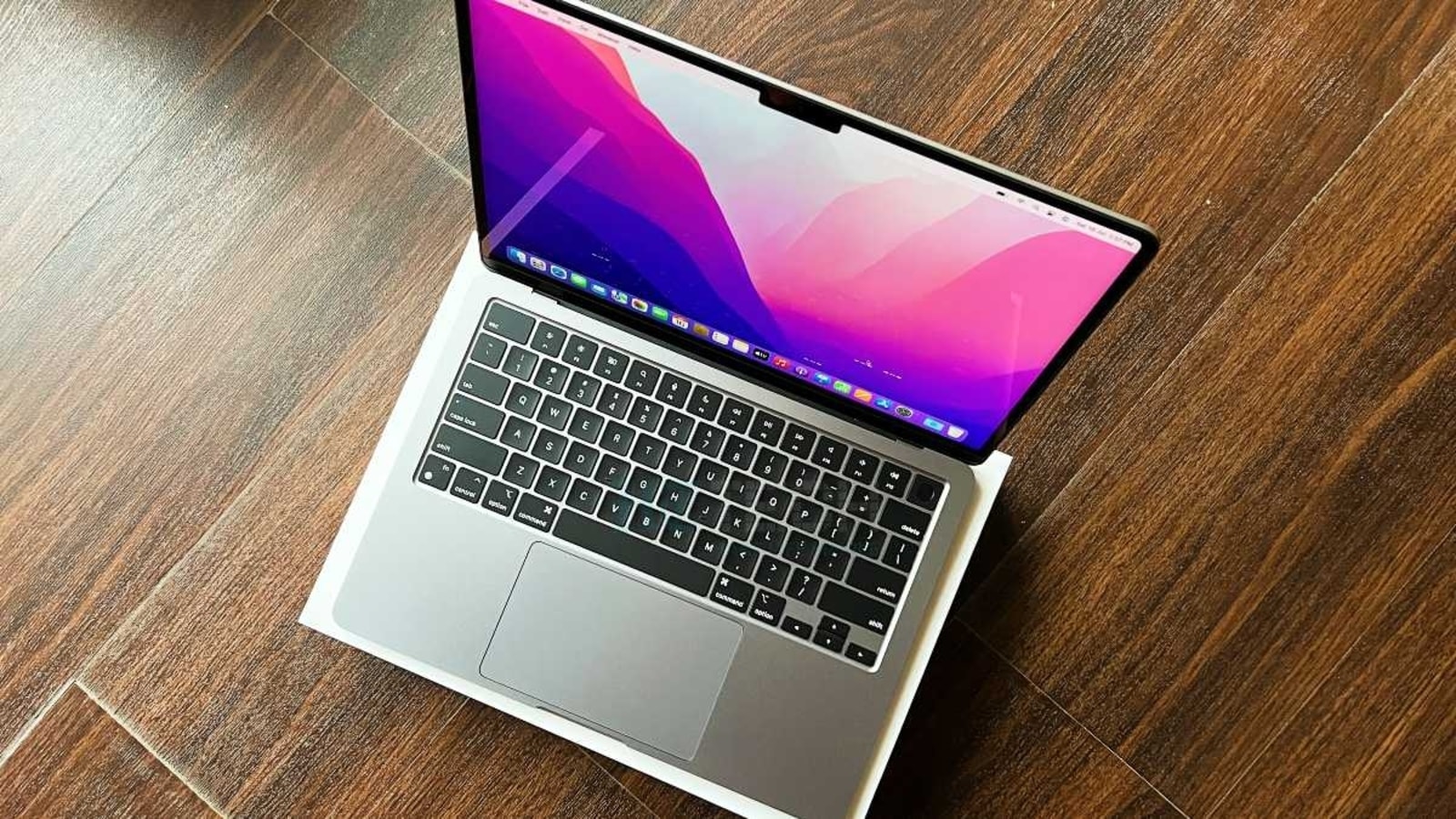
The Apple MacBook Air M2 can be bought at a price of Rs. 99900 on Amazon. Here is how to get the deal.
The Apple MacBook Air M2 is currently available with a massive discount on Amazon. The MacBook Air got a major redesign earlier this year and Apple gave it the updated M2 chipset. The new MacBook Air now becomes a solid work laptop for those who seek a reliable machine without needing extra graphical processing performance. Additionally, the MacBook Air M2 also proved itself with a great battery life, which is a rarity in slim notebooks these days.
The only con was with its price, which was a notch higher than its predecessor at launch. The MacBook Air M2 was launched at a starting price of Rs. 119,900 for the base 256GB variant and 8GB RAM. With the old MacBook Air M1 still around, not many people find it a good deal to spend more and get the upgraded variant. With this Amazon deal, things could change for the M2 model.
Apple MacBook Air M2 deal on Amazon
The 2022 MacBook Air with the M2 chipset is currently enjoying a great discount. The MacBook Air M2 256GB variant is usually available at a price of Rs. 105,900. However, Amazon is selling the laptop at a discounted price of Rs. 105,500. That is a major price cut from the original launch price and makes for a great deal in itself.
However, that is not all. Those customers who make the transaction via the HDFC Bank credit card can avail a discount of additional Rs. 6000 on this price. Hence, the price of the MacBook Air M2 on Amazon goes down to Rs. 99,900.
For that price, the MacBook Air M2 is a great deal. You get a bigger 13.6-inch display that is brighter; thanks to its slimmer bezels and a display notch on the top. The port situation doesn't improve but you get an extra MagSafe port to charge the laptop via the provided MagSafe cable. The new M2 chip also offers faster performance and the battery performance is among the best you can find in the market today.
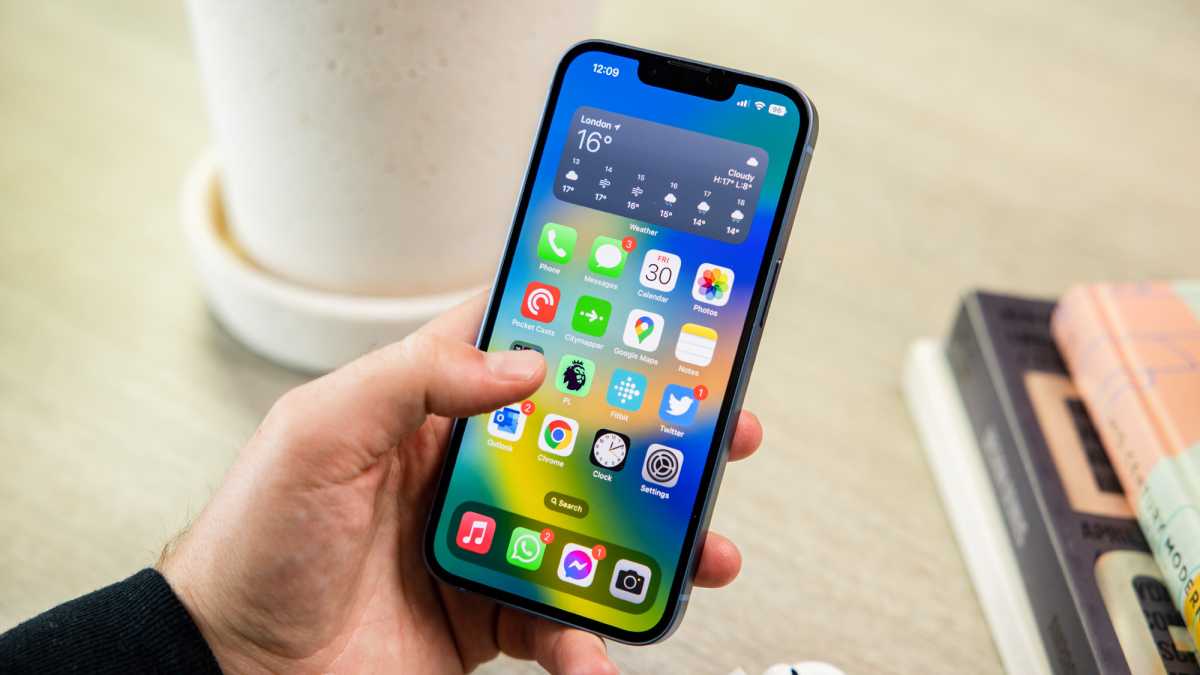
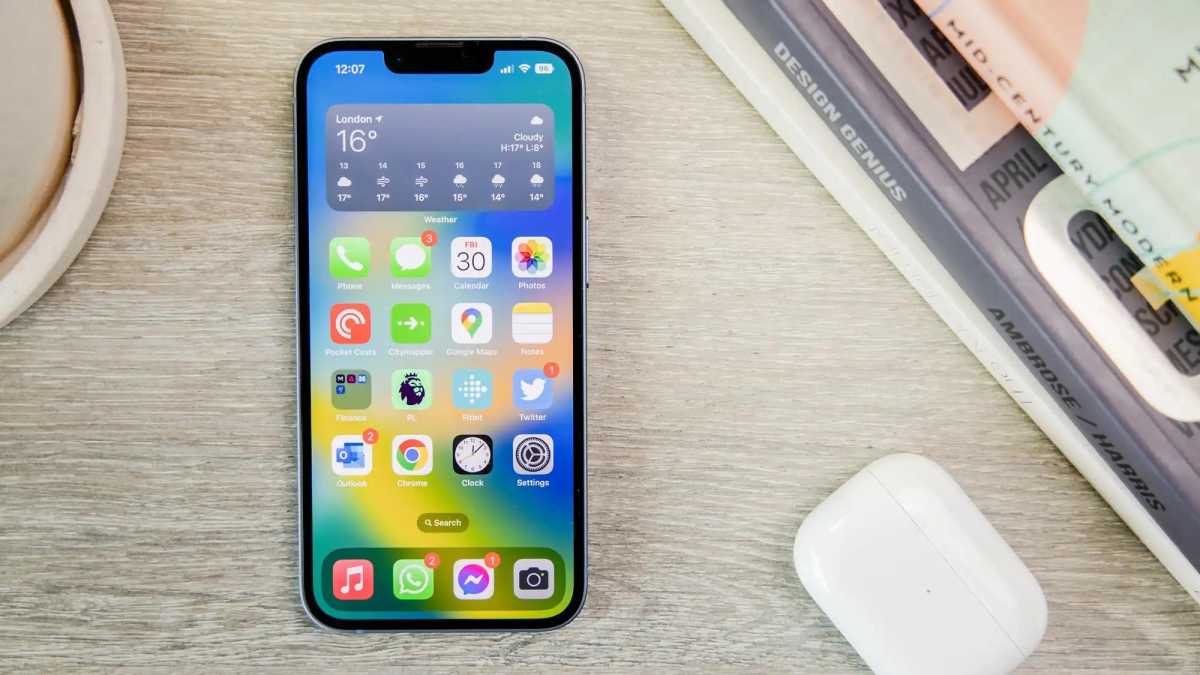
The iPhone 14 is the latest generation of Apple’s smartphone range, replete with all the bells and whistles you’d expect. But, if you’re on an iPhone 11 and thinking of upgrading, you can be certain that the iPhone 14 is a lot better. But how does it really compare to Apple’s latest phone?
iPhone 14 vs iPhone 11: Design
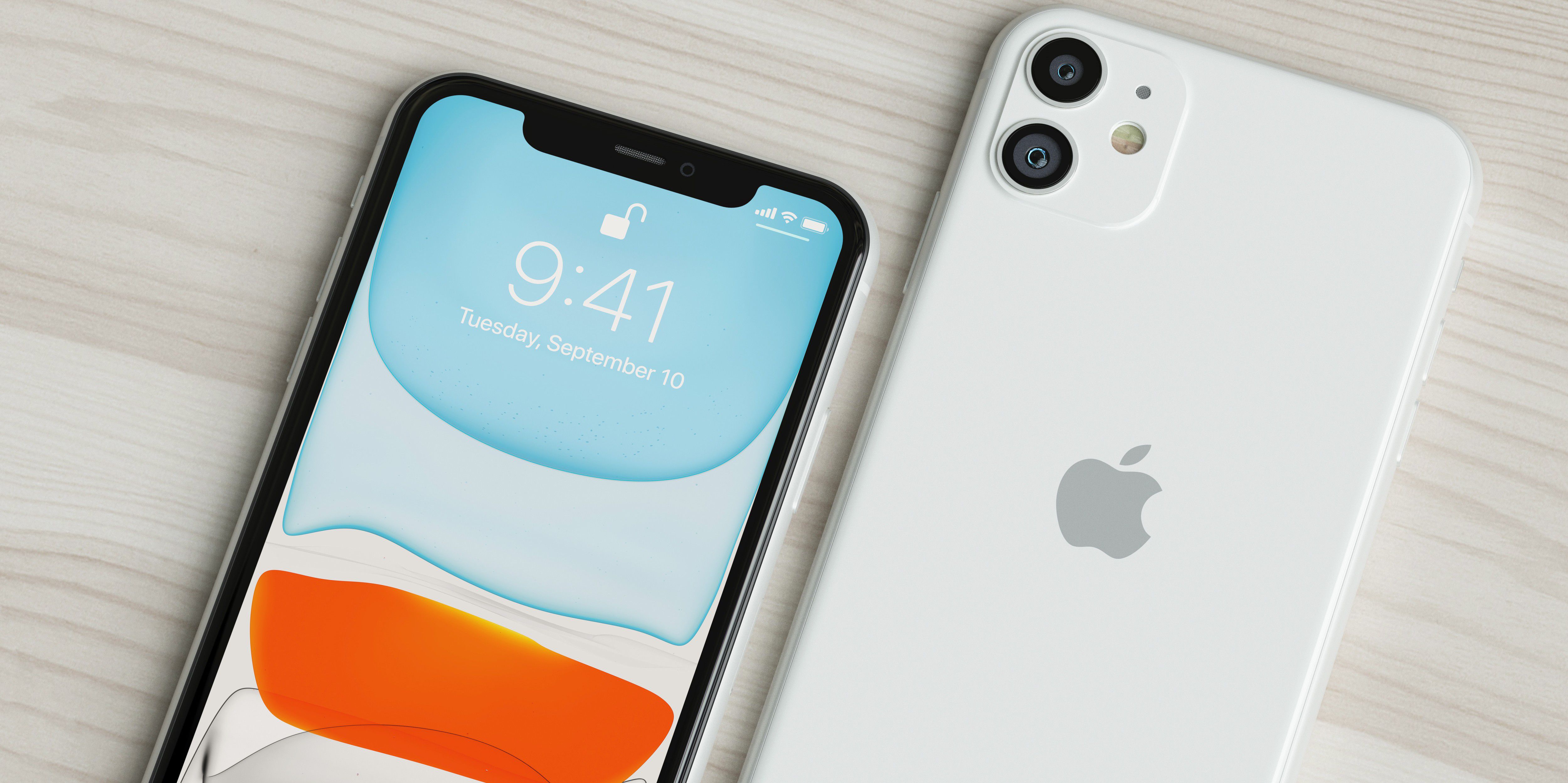
These two iPhones come with quite noticeably different aesthetics. The iPhone 11 shares the same curved lines as the iPhone X, Xs, and Xr, while the iPhone 14 uses Apple’s newer flat-edged design that was introduced with the iPhone 12 and has a smaller notch than the 11. The phones are similar, but the iPhone 14 definitely looks more modern, with sharper lines that hark back to the golden era of iPhone design that debuted with the iPhone 4.
Here’s how the two compare in terms of dimensions:
iPhone 14: 146.7mm x 71.5mm x 7.8mm; 172g
iPhone 11: 150.9mm x 75.7mm x 8.3mm; 194g
As you can see, the iPhone 11 is taller, fatter, and thicker than the newer model, plus it’s more than 20 grams heavier too.
iPhone 14
Dominik Tomaszewski / Foundry
Both have many similarities, sporting a 6.1-inch display, dual rear cameras, Lightning port, and aluminum chassis, and come in a variety of colors (white, black, green, yellow, purple, and red for the iPhone 11; Midnight (black), Starlight (silver), blue, purple and red for the iPhone 14). In a nutshell, they both look like iPhones, but the iPhone 14 looks like a newer one.
iPhone 14 vs iPhone 11: Display
While both phones have a 6.1-inch screen, there are some significant upgrades on the iPhone 14. Firstly, the display on the newer model is OLED rather than the lower-quality LCD on the 11. The iPhone 14 also has a higher resolution, HDR, a greater contrast ratio, and is significantly brighter.
iPhone 14
2532×1170 resolution (460ppi)
2,000,000:1 contrast ratio
800 nits max brightness (typical), 1200 nits peak brightness (HDR)
iPhone 11
1792×828 resolution (326ppi)
1400:1 contrast
625 nits max brightness
That’s not to say that the display on the iPhone 11 is bad, but the years between the models have seen Apple ramp up the quality on the superior panel of the iPhone 14. The new range also comes in a larger variant, the iPhone 14 Plus, which boasts a 6.7-inch OLED panel for those who want even more space on their display. The iPhone 14 also has a Ceramic Shield covering for the front panel, which is tougher than the Gorilla glass found on the iPhone 11l.
iPhone 14 Display
Dominik Tomaszewski / Foundry
iPhone 14 vs iPhone 11: Camera
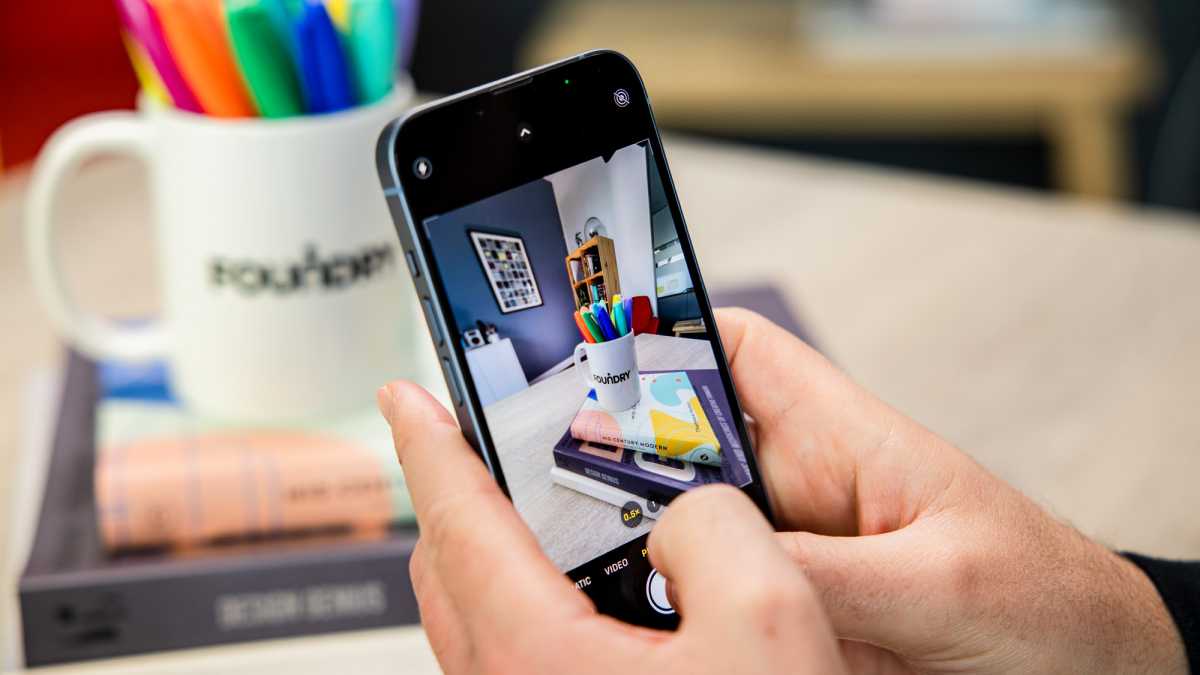
At first glance, it might seem that the cameras on the two devices are actually very close. Both have dual cameras on the rear, consisting of a 12MP main and 12MP Ultra Wide. Look a bit closer, however, and you’ll see that like with everything else the iPhone 14 has been tweaked to offer more capabilities.
For a start, the iPhone 14’s 12MP main camera has an aperture of f/1.5 rather than the f/1.8 on the iPhone 11. This might not sound like much, but will improve low-light photography and offer a shallower depth of field. Stabilization is also different, with the older device coming with Optical Image Stabilisation (good) but the iPhone 14 having Sensor-Shift Stabilisation (better).
There’s the same Deep Fusion technology on both, as well as .5x and 1x optical zooms, True Tone Flash, Portrait, Portrait Lightning, and Night modes. The iPhone 14 bumps up the Smart HDR to version 4, whereas the 11 is back on version 2, plus there’s the new Photonic Engine in the 14 that uses software to further improve the color and contrast balance in shots. Apple upgrades the camera with each iPhone generation, so after three years, you’ll definitely see a significant improvement in photo quality.
iPhone 14 Camera
Dominik Tomaszewski / Foundry
On the video side of things, there are a lot of shared features, as both can shoot up to 4K at 24, 25, 30, or 60 frames per second. There’s also slo-mo video that maxes out at 1080p/240fps, Time-lapse with stabilization, QuickTake videos, 2x optical zoom, audio zoom, and stereo recording.
The TrueDepth front cameras are very similar, as they both have 12MP sensors but the f/1.9 aperture on the iPhone 14 is slightly wider than the f/2.2 one of the iPhone 11. You’ll also get Night mode on the iPhone 14, which will help will low-light situations.
Where the newer processor in the iPhone 14 comes into play is with Cinematic mode, which allows you to pull focus and have a very shallow depth of field to achieve movie-style effects. There’s also the Action mode that keeps everything steady even if you’re running around with the camera, plus HDR video at 4K/60fps. You’ll get some great pictures and video on the iPhone 11, but if you’re a budding Christopher Nolan then the extras features on the iPhone 14 will be hard to resist.
iPhone 14 v iPhone 11: Processor and specs
The iPhone 14 has Apple’s A15 Bionic chip at its heart, which is quite the beast. From a structural point of view, it has the same 6-core CPU as the A13 Bionic in the iPhone 11, but it’s significantly faster with an additional GPU core and twice as many cores in its Neural Engine. Battery life will be greatly improved as well. In our testing, we got about 9 hours of battery life with the iPhone 14 versus 5-and-a-half with the iPhone 11.
Storage is more generous on the iPhone 14, as it comes in 128GB, 256GB, and 512GB variants, while the iPhone 11 launched with 64GB, 128GB, and 256GB allocations. Both phones have IP68 waterproof ratings, though the iPhone 14 can survive being immersed deeper than the iPhone 11 (6 meters as opposed to 2). You’ll also get Wi-Fi 6, NFC, and Bluetooth on both (although the latter is 5.3 on iPhone 14 but 5.0 on iPhone 11). And on the iPhone 14, you’ll get 5G wireless speeds, while the older model has 4G LTE.
The iPhone 11 has a slower processor but is still a very capable iPhone even in 2022.
Shutterstock / ALDECAstudio
iPhone 14 vs iPhone 11: Price
When it was released in 2020, the iPhone 11 was cheaper than today’s iPhone 14. However, you’re getting more storage, 5G support, and a newer design for an extra $100 and up.
iPhone 14
iPhone 14 (128GB): $799/£849
iPhone 14 (256GB): $899/£959
iPhone 14 (512GB): $1,099/£1,179
iPhone 11
iPhone 11 (64GB): $699/£699
iPhone 11 (128GB): $749/£749
iPhone 11 (256GB): $849/£849
iPhone 14 vs iPhone 11: Should you upgrade?
Even all these years later, the iPhone 11 is still a decent phone with plenty to offer. The cameras are solid, the performance should still be plenty good, and iOS will still be supported for several years to come. However, the iPhone 14 is vastly superior in many ways, with a fantastic display, faster chip, and enhanced camera capabilities, as well as a lighter and newer design. Both are good, but the iPhone 14 is simply better—and if you’ve been considering an upgrade, we recommend going for it.
Martyn has been involved with tech ever since the arrival of his ZX Spectrum back in the early 80s. He covers iOS, Android, Windows and macOS, writing tutorials, buying guides and reviews for Macworld and its sister site Tech Advisor.
A high-level overview of the pipeline. First, a text prompt is fed into a GLIDE model to produce a synthetic rendered view. Next, a point cloud diffusion stack conditions on this image to produce a 3D RGB point cloud. Credit: arXiv (2022). DOI: 10.48550/arxiv.2212.08751
A team of researchers at San Francisco-based OpenAI, has announced the development of a machine-learning system that can create 3D images from text much more quickly than other systems. The group has published a paper describing their new system, called Point-E, on the arXiv preprint server.
Over the past year, several groups have announced products or systems that can generate a 3D-modeled image based on a text prompt, e.g., "a blue chair on a red floor," or "a young boy wearing a green hat and riding a purple bicycle." Such systems generally have two parts. The first reads the text and tries to make sense of it. The second, trained on internet searches, renders the desired image.
Because of the complexity of the task, these systems can take a long time to return a model, ranging from hours to days. In this new effort, the researchers built a similar system that returns results within minutes, though they readily acknowledge that the results "fall short of the state-of-the-art in terms of sample quality."
To create images more quickly, the researchers adopted an approach somewhat different than others. Their system does not even create images in the traditional sense. Instead, it generates point clouds, which, when viewed together, resemble the desired image. The team took this approach because generating point clouds is far easier than generating actual images. To create the results, the system routes images it finds through another AI system they developed that converts what it receives to meshes, which produce the 3D point cloud model of the intended object.
The first part of the system was made using two modules—the first converts the text into an image idea and the second part finds images that are used to generate a generic image. In operation, the system runs very much the same as others of its kind—a user inputs a descriptive text prompt and the system returns an image model. They note that while the visual quality is not comparable to other systems, it might be more suitable to other applications, such as fabricating real-world objects via a 3D printer.
The researchers have made the system open access—users who wish to work with it can access the code on GitHub.
More information: Alex Nichol et al, Point-E: A System for Generating 3D Point Clouds from Complex Prompts, arXiv (2022). DOI: 10.48550/arxiv.2212.08751
Citation: OpenAI announces Point-E, a machine learning system that quickly creates 3D images from a text prompt (2022, December 21) retrieved 21 December 2022 from https://ift.tt/xPUw30j
This document is subject to copyright. Apart from any fair dealing for the purpose of private study or research, no part may be reproduced without the written permission. The content is provided for information purposes only.